Outages & service disruptions
Keep people informed while your crews work.
When service goes down, the calls come in. Give people a place to check, notify the addresses affected, and keep everyone updated without answering each person separately.
Main breaks. Power outages. Service advisories.
The same communication work, handled in one place.
From report to public update
The power goes out. Here’s what happens next.
Illustrative example. Your team controls what goes public.

A place to check before calling
“Is it just my street?”
Put a public outage map on your website. Show the affected area, what is happening, and the latest update from your team.
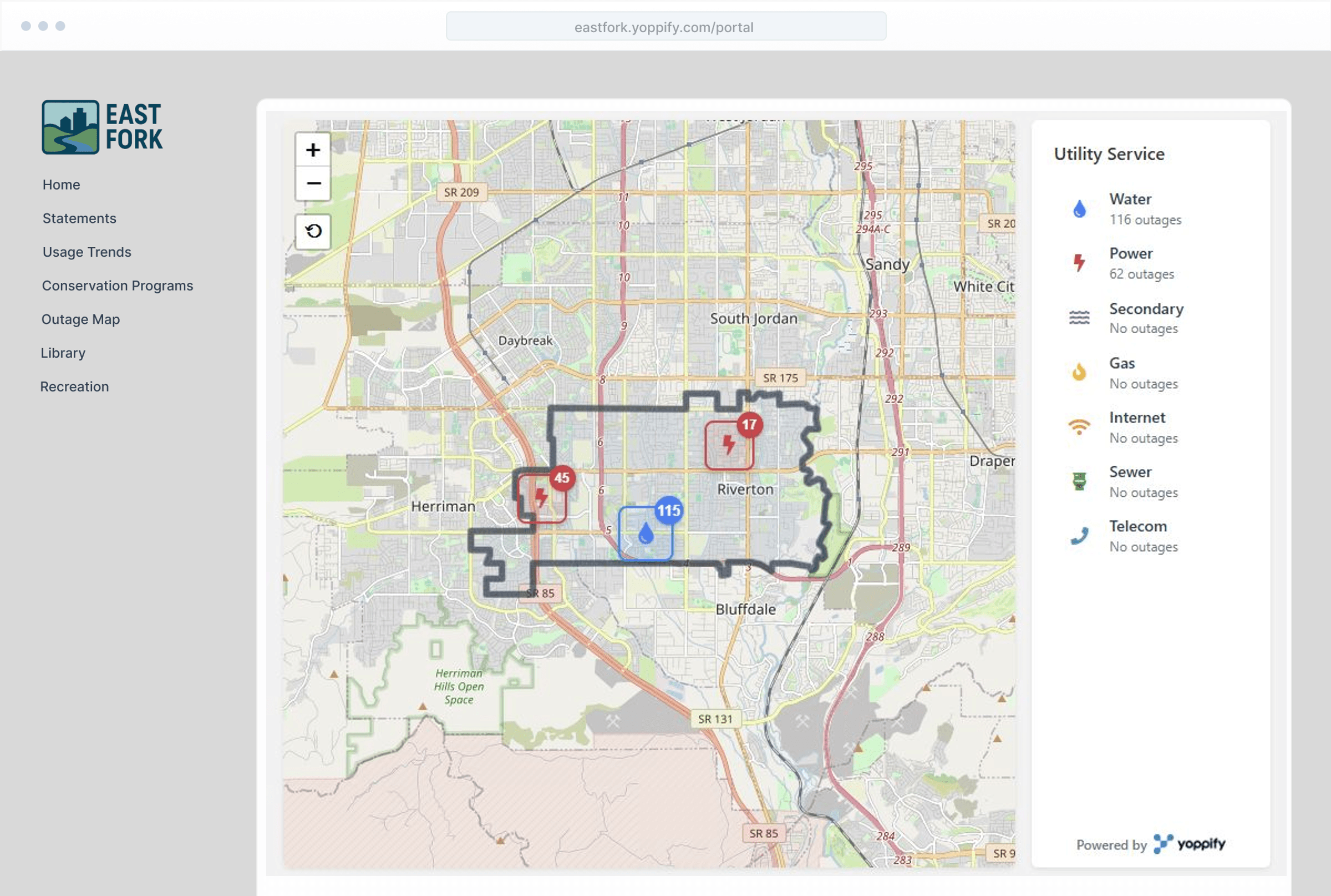
Show the area, not the homes.
Make the affected area clear without displaying individual service addresses.
Let people follow an incident.
People can subscribe to updates for the outages that matter to them.
Keep the answer current.
Share time-stamped updates and the restoration estimate your team provides.
Before the first call. After the last update.
Keep the whole job connected.
Planned work, too.
Publish scheduled maintenance and notify the affected area before work starts. Keep updates on the same page when the work begins.
More than power outages.
Use the same process for water main breaks, service advisories, sewer problems, and road closures.
A record you can return to.
Keep published updates, timestamps, and notification records for accurate tracking and verification.
When people still need to reach you
Take the pressure off your phones.
Not everyone will check the map. Give callers the current status and give new reports a clear path to your team.
“When will service be back?”
Your outage phone service can share the current status and restoration estimate, or take a report for review. Urgent conditions can go to a person.
“Crews are repairing the water main near Oak Street. The current estimate for service restoration is noon.”
Based on the incident information your team provides.
“There is water in the road.”
Let people submit a report with a location. Your team reviews what comes in before anything goes on the public map.
- 1Community report received
- 2Your team reviews the location and details
- 3Publish an incident when appropriate
Be ready before the phones light up.
Walk us through your last outage. We will show you how the map, notices, and call response can work together.